How to position as Chair of the Board migrating from CEO in the same company?
Max Jadot, Chair of BNP Paribas Fortis shares his experience and Guberna challenges based on questions from Alumni and Guberna research on the topic.
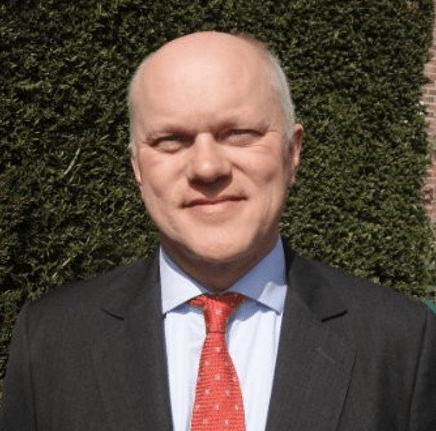
The Director Sparkles is monitored by Chris Wouters, Alumnus and Certified Director of Guberna with Board Experience of 20 years and also a three decade history as manager at BNP Paribas Fortis and three years at EY.
Professional Experience of Max Jadot
Max Jadot has worked for more than four decades for the same institution. Jadot has seen it evolve from Generale Bank to Fortis and today BNP Paribas Fortis. He began as a trainee at the teller, a six-month experience he still considers invaluable, and went on to spend fifteen years in retail banking as branch manager, group manager and marketing manager across different regions in Belgium. He then switched métier completely, taking the lead of corporate finance and capital markets, where he was responsible for IPOs and M&A for eight years. Later he moved into general management, first in Paris as CEO at Fortis Bank France and territory manager during the Fortis crisis, which became a defining moment in his career. Back in Brussels, he became responsible for corporates, then served nearly twelve years as CEO of BNP Paribas Fortis, and for the past two and a half years he has been Chair of the Board of Directors.
Alongside his executive career, Jadot accumulated extensive boardroom experience. For twenty-five years he represented the Bekaert family on the board, he chaired the Bekaert family AK for fourteen years, and today he sits on the boards of Sibelco, Baltisse and BGL BNP Paribas.
What was your approach changing from CEO to Chair of the Board and what can we learn from it in similar situations?
First of all, it is a matter of confidence between all stakeholders. Everybody must feel comfortable and at ease and must take responsibility when such a change happens, which is not very frequent. Who are the stakeholders? Obviously, the board itself, the shareholders, management, the future management, the CEO, and also myself. I must feel comfortable that I can make the change from an operational function to an oversight function. And in the financial sector there is another very important actor: the regulators. One has to pass a fit and proper test, and supervisors in Belgium and at European level must be convinced that the change can work. If all actors, including the regulators, feel confident, then you can start in the new function. So confidence, respect of roles and a clear knowledge of what the new role is are key.
As this was the case, it felt more like continuity, continuity for the bank, even though it was not continuity in the type of activities. That is an important nuance.
How did you prepare for the shift from an operational to a supervisory role? I was not without knowledge of what a chairpersonship or board membership entails. I was on the board of BNP Paribas Fortis for twelve years as an executive board member. I learned a lot from chairs such as Herman Daems, who was a great teacher in governance. At Bekaert I served with Paul Buysse, a true specialist in governance, whose lessons I still remember. I also gained experience at BGL BNP Paribas and at Sibelco, and of course at the Bekaert AK. The late Paul Buysse, whom I respected very much, taught me a lot about the role of the chair, of committees, and of board members. Thanks to these examples I knew in depth how a board should function, what committees do and what the chair can and cannot do.
Still, it is a very different job. As chair you are responsible for oversight. The day-to-day management belongs to the CEO and the executive board. These are collective responsibilities, but the roles are clearly separated by governance codes, internal regulations and laws.
Can you give an example of something you used to do as CEO that you no longer do as chair?
Certainly. As CEO I was in the credit committees all my life, deciding on individual credit files. As chair I no longer participate in credit committees and I no longer decide on individual files. Of course, exceptionally, the CEO may ask my advice if my past experience or knowledge of a client is relevant. But otherwise I do not intervene in individual cases. That is a substantial difference. You have to let go. If you cannot let go, if you want to continue intervening in daily management, then you should not accept to become chair. It is a different role, and you must respect that.
Group 5554, Gegroepeerd object “If you cannot let go, if you want to continue intervening in daily management, then you should not accept to become chair.” – Max Jadot
Are these lessons also valid for smaller companies?
Absolutely. The principles are general, not specific to banks. It is not easy, which explains why there are not many examples in Belgium, but if you are experienced and willing to let go, and if there is respect and confidence between all actors, including the regulators, then it can work.
You succeeded Herman Daems as chair. He had a different background, without your long operational career. Did that change the board dynamics?
I saw more continuity than change. Herman and I had a very open relationship and we met weekly to discuss what was happening at the bank. I still do that with the current CEO to ensure fluid communication. The proposal for me to succeed him came from the board itself. Herman was chair for fourteen years, very experienced and knowledgeable in governance. Of course, my banking knowledge is deeper, but the world evolves so fast that we all must adapt constantly. So again, continuity rather than disruption.
As for the BNP Paribas Fortis board composition, there are three groups. First, representatives of BNP Paribas Group, and I like to have strong representatives around the table. Second, the full executive board, as required by law. Third, the independent directors, who are crucial as they chair the committees as independent challenger. We have four committees: audit committee, risk committee, remuneration committee and governance & nomination committee, all chaired by independents. We constantly look for diverse competences, gender and age balance, and international profiles. Recently we added an IT profile and a CFO profile. Succession planning is an ongoing concern. So continuity with constant renewal.
Do you work with a competence matrix?
Absolutely. We have had one for many years. We assess the board every year and currently we are undergoing an external evaluation by a third party, which is good governance practice every three or four years. These tools of governance ensure continuity and effectiveness. Given the complexity of the bank, such mechanisms are indispensable.

What are the main topics on the agenda of the board today?
I won’t rank them, but the first topic is strategy. That includes business development and also crisis management. Since I joined general management, we have faced the financial crisis, the European debt crisis, negative interest rates, and COVID. There are always crises. Today geopolitical risks are more prominent. Strategy also includes subsidiaries and activities such as Arval or TEB, our Turkish subsidiary.
The second block is risk management. Oversight and control of risks is a key task of the board. That covers credit risk at portfolio level, operational risk, reputational risk, IT and cyber risks. The existence of both a risk committee and an audit committee shows the importance of this area.
Sustainability is another central theme. For more than six or seven years we have organised two strategic offsites per year. In June we review the business lines. In October we dedicate more than half a day to sustainability topics: regulation, climate change, cultural aspects, and ESG in the broad sense. These sessions involve not only board members but also internal stakeholders: legal, risk, business and ESG coordinators. We started this practice when I was CEO, and it continues today. It is essential that sustainability is integrated, not treated as an afterthought.
And then, of course, innovation. I have been in the bank for 42 years. In one sense, nothing has changed: we always serve clients. In another sense, everything has changed: when I started you had tellers everywhere; today most of it is digital.
Digitalisation has transformed banking, and innovation remains high on the agenda.
How do you see artificial intelligence in this context?
AI is a hot and complex topic. For the moment, it is mainly the responsibility of management. It started with robotics, automating tasks from reading letters to compliance and KYC. BNP Paribas Group is far advanced in this field. Robotics is now evolving into AI, especially in operational areas. In the future it will support credit decisions.
The board is informed and we challenge management. To reinforce this, we recently added the former CIO of BNP Paribas Group as a non-executive director. Our role as board is oversight and challenge, not execution.
And what about cryptocurrencies such as Bitcoin?: At BNP Paribas Fortis we do not currently offer such products. If ever management proposed it, they would present it to the board, but it is their responsibility to prepare and implement. For now, I am not pushing management to come forward with such projects.
Beyond strategy and risk, how do you see the role of banks in society?
Our Bank has existed for more than 200 years. BNP Paribas Fortis was created in 1822. The fundamental role of banks is to transform savings into credits, and to convert shortterm deposits into long-term financing. This is complex and risky, but vital for the economy. Unfortunately, this role is often underestimated. Banks create real value for society, and people should understand that better.
Banks transform savings into credits, converting short-term deposits into long-term financing. It is complex and risky, but vital for the economy.” – Max Jadot
Topics like outsourcing of people or development of talent, when do they reach the board?
Outsourcing is clearly a board responsibility, though not at the operational level. Major outsourcing projects come to the board for decision. Management prepares and implements, but oversight remains with the board. At present, BNP Paribas Fortis is in such a process. This division of roles is very clear.
There is little research on the topic changing from CEO to Chair in the same company. We found in a very recent German research paper the following three statements :
First, strategic choices are less challenged & more influenced by the Chair, former CEO with a potential impact on performance.
Second, the organisation is more stable & resource allocation is less dynamic.
Third, shareholders aim for sustainable development.
What is your experience on these and can you share a concrete example?
On the first one, it can go both ways. If as chair you block development, then you should not accept the role. You must look in the mirror before accepting. But if you know the company well, you can help it move forward. I have chosen that path.
The second is true. Continuity was important in our case. Without this transition both the CEO and the chair might have left at the same time, which would have been unhealthy. I do not see a point on resource allocation.
The third is partly true. Sustainable development does not mean avoiding major changes. Over the last decade we have undertaken profound transformations: full digitalisation, the acquisition of bpost bank, reorganising subsidiaries. These were disruptive but still sustainable. In Greek the saying is panta rhei: nothing moves and everything moves. The client remains central, but the way of banking has transformed completely since 1983.
If, as a former CEO, you cannot let go of daily management or if you would block the development of the company, then you should not accept the chairpersonship.
Looking ahead, do you expect new themes in governance?
The main elements are already present: ethics, sustainability, risk and strategy. Governance has evolved continuously over the years, and I do not expect sudden new areas to emerge. The focus will remain on these pillars, which are already broad and demanding, and boards must continue to deal with them in a consistent way.
Any final advice for Guberna alumni and Directors in general?
I already gave my conclusion with the Greek proverb: panta rhei. Nothing moves and everything moves. That is the essence. It captures what I have experienced in more than forty years in banking. On the one hand, the fundamentals remain the same, serving clients, transforming savings into credits, ensuring stability. On the other hand, everything keeps evolving, crises, technologies, regulations, and expectations. If there is one lesson, it is that continuity and change always go together.
“Panta rhei, nothing moves and everything moves. That is the essence.” – Max Jadot
Datum: September 2025
Feedback can be sent to wouters_chris@skynet.be
Research Papers on the topic:
Monitoring the monitor: Enabling strategic change when former CEO stays on the Board, Michael Cummings, J.P. Eggers, Richard D. Wang published in 2021 by Elsevier
When the former CEO stays on as Board Chair: Effects on successor discretion, strategic change, and Performance, Timothy J. Ouigley and Donald C. Hambrick published in November 2011 in Strategic Management Journal
Is commitment to the status quo really bad news? The case of former CEOs staying on as board chairs in Germany, Reynaldo Valle Thiel, Holger Lüdeke and Annette Biedermann published in May 2025 in Journal of Management and Governance
Readings
In general: ‘Geheimen van de bestuurskamer’ geschreven door Herman Daems (in het bijzonder het hoofdstuk over de voorzitter en de toekomst van type 1 bedrijven)
GUBERNA paper on cybersecurity: cybersecurity:https://www.guberna.be/en/know/cybersecurity-how-ready-are-belgian-directors-and-boards
Sustainability:https://www.guberna.be/en/know/are-boards-well-prepared-lead-next-chapter-sustainable-value-creation
GUBERNA Mini series on geopolitics (summer 2025)
Listen as podcast
Our Speakers
-
Chris Wouters
GUBERNA Certified Director
-

Max Jadot
Chair of the Board of Directors at BNP Paribas Fortis