Report of the second Secretary General Masterclass - April 2025
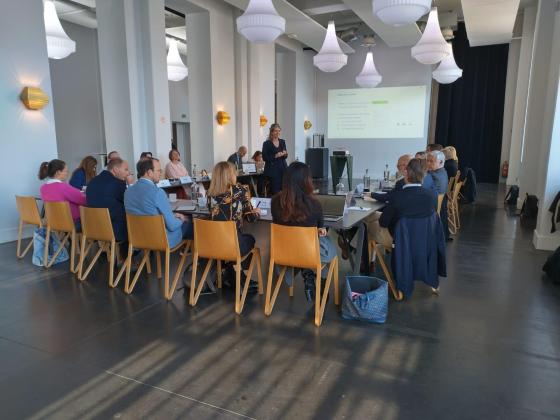
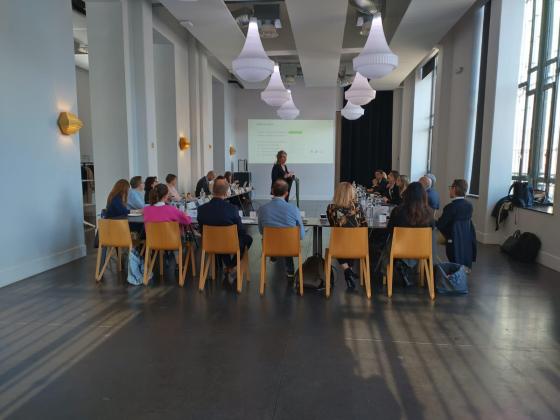
With 17 participants from various companies and industries, the second edition of the Secretary General Masterclass was once again a success. In the spacious premises of Maison de la Poste (Tour & Taxis), participants enjoyed a rich and engaging programme.
Setting the Scene: Governance in Turbulent Times
The day began with a presentation by Sandra Gobert, CEO of GUBERNA, who offered valuable insights into the growing influence of US regulations on subsidiaries — and even on companies within the European Union — and stressed the need to rethink delegation and control mechanisms in these turbulent times. Sandra emphasised the crucial role of the Secretary General: as agenda-setter and initiator of best practices, as gatekeeper of purpose and values, and as translator of regulatory frameworks.
Sandra then moved on to discuss the Omnibus Directive, explaining its practical implications and the so-called “stop-the-clock” provision. This triggered an interesting debate among participants about their perceptions of the directive. One participant remarked that their company was unsure whether to be pleased or concerned about the Omnibus Directive, given that they were already well-prepared for CSRD requirements — a sentiment echoed by several participants. Sandra concluded her presentation with an overview of the new Buysse Code and the current status of the next Corporate Governance Code for listed companies.

Insights into Remuneration and Diversity
Sander Berghmans, researcher at GUBERNA’s SME & Family Business Unit, presented key findings from the recent remuneration study of non-executive directors in non-listed companies. He remarked that "good governance doesn’t need to cost more than a mid-range car." The study’s data also highlighted a significant underrepresentation of women on the boards of non-listed firms.
Board Culture and Secretary Generals
This presentation was followed by a panel discussion on board culture, moderated by Saartje Verbeke, GUBERNA’s Lifelong Learning Manager. The panel featured Kristof Macours (Group General Counsel & Division Head Legal and Corporate Secretariat, Euroclear), Alessandra De Lisio (Head of Governance & Strategy, Lloyd’s), and Adriana Cavaliere (Senior Risk Manager, Skeyes & Board Member of Belrim).
Since board culture is primarily about people’s behaviour, the panel discussed the importance of board composition and onboarding, as well as clear communication, roles, and guidelines. The Secretary General, they noted, is not merely a passive observer, but can actively foster a positive board dynamic — by contributing to a “good culture”, they create the conditions for “good meetings”.
The panel also underlined the importance of the relationship between the Chair and the CEO — ideally a constructive tension that sets the tone for the company. The Secretary General plays a key role in facilitating and supporting this dynamic. One practical tip that was shared was to ensure that during board meetings, the Chair and CEO are positioned to make eye contact — and avoid having them seated side by side.

Global Trends in Corporate Governance
In the keynote lecture after lunch, Geof Stapledon, Managing Director of GPS Global Advisors and non-executive board member in UK and Australian companies, outlined key trends in the evolution of corporate governance worldwide.
Since the introduction of the UK’s first Corporate Governance Code (Cadbury, 1992) and landmark court cases in Delaware in the 1980s and 1990s, the role of independent directors — particularly in takeover situations — has become increasingly important. Today, non-executive directors and institutional investors — operating more globally than ever — help spread good governance practices across borders.
Technology also plays a growing role, with various market platforms supporting board evaluations and governance processes. Educational programmes and certifications, offered by universities and professional bodies, further enable the international exchange of best practices. At the same time, there is an increasing ESG backlash, especially in the US. While ESG peaked around 2021, recent years have seen rising resistance — particularly from Republican-led states — against ESG and DEI (Diversity, Equity & Inclusion) initiatives. Large companies, investors, and even proxy advisors are adapting their strategies accordingly.
Geof concluded by highlighting that, in certain industries — such as mining and fossil fuels — a company’s societal “license to operate” is often just as important as formal governance codes or regulations, particularly regarding remuneration policies.
The Impact of AI on Boards
The final session of the day was delivered by Katia Ciesielska, Legal and Corporate Governance Counsel and Independent Board Member of ILA (The Luxembourg Institute of Directors). Katia began by explaining the different types of Artificial Intelligence (AI) and their characteristics. She then discussed several AI applications and how they function best within specific contexts. An animated discussion followed with participants on the advantages and disadvantages of using AI in board settings, as well as the potential risks and challenges its use may pose for governance, especially pointing to the use AI developed in countries that do not have as strong privacy regulations as Europe has.
With this presentation the event was concluded. We would like to thank all the presenters and secretary generals for their involvement in this successful masterclass and look forward to seeing you next year.