
SME Centre
This centre supports SMEs on their path to good governance, taking into account the specific challenges they face at each stage of growth.
From start-up to family business, from advisory board to professional board of directors.
Governance is not a formality. It helps you make better decisions, manage risks, convince investors and achieve sustainable growth.
That is why GUBERNA aims to inspire SME entrepreneurs on good governance, tailored to their needs.
Governance Maturity Scan
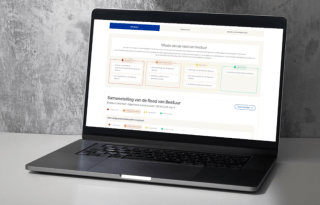
This concise yet well-considered questionnaire (approximately 15 minutes) gives you a clear insight into the key challenges facing your SME and how good governance can help address them.
Once completed, you will receive a free report with tailored recommendations.
This concise yet well-considered questionnaire (approximately 15 minutes) gives you a clear insight into the key challenges facing your SME and how good governance can help address them.
Once completed, you will receive a free report with tailored recommendations.

Want to know more?
Discover in our white paper "Good governance in my SME" how to build a professional governance structure step by step, in line with your company's stage of growth.
Who is it for?
The SME Centre is (in principle) aimed at SMEs with up to 250 employees and up to the second generation. But what matters most is ambition and governance maturity.
Find out where your company stands today with the Governance Maturity Scan.

Good governance and maturity
Good governance is not an end in itself, but a means to realise your strategy and create lasting value. As your company grows, your governance evolves with it, in five stages:
- The owner decides alone: at start-up, the owner takes every decision single-handedly.
- Ad hoc advisers: the entrepreneur seeks external advice on a project basis.
- Advisory board: advice is structured within a permanent body that meets regularly.
- Active board of directors with external members: the board meets in earnest and focuses on long-term strategy.
- Further development of governance bodies: committees such as an audit committee and a remuneration committee are added as the company continues to grow.
This evolution is not linear: some companies move quickly, others more slowly. The pace is set above all by the maturity and openness of the entrepreneur.
Advisory board or board of directors?
An advisory board is an external sounding board where the entrepreneur can discuss the future in complete confidence. A board of directors goes a step further: it has real decision-making power and a legal basis. In short: the board of directors are the players on the pitch; the advisory board is the coach on the sidelines.
Benefits of an advisory board
- Easy to set up, no legal obligations
- Professionalises the way the business is run, step by step
- Flexible and tailored to your company
- Focus on competencies rather than formalities
Benefits of a board of directors
- Legal basis and binding decisions
- Emphasis on the long term and strategic focus
- External credibility with banks, suppliers and investors
- Clear division of tasks and responsibilities
Why external directors?
Twelve reasons why working with external advisers or directors is a good idea:
- It is an essential step towards professionalising the company.
- It stimulates strategic thinking.
- It helps the company cope with its growing complexity, scale and scope.
- It is an ideal instrument for sound monitoring, control and risk management.
- It promotes long-term leadership and succession.
- Good governance supports the progress of growth companies, which is also key to the development of our economy.
- It helps the company demonstrate its ESG efforts.
- It provides access to a new network.
- It improves the company's risk profile and thereby strengthens the confidence of investors and employees.
- An active board of directors pays attention to aligning the various shareholders.
- An active board of directors encourages good cooperation with 'patient' providers of illiquid capital.
- A collegial board of directors is a legal requirement in every NV/SA (public limited company), or in a BV/SRL (private limited company) if its articles of association provide for one.
Services & tools

Events
Stay up to date with our events, workshops and networking moments for SME directors.