GUBERNA Podcast - Governance Talks - Why scenario planning has become the board’s core discipline?
Governance Talks is the monthly podcast of GUBERNA, the Institute for Directors. Each episode, we sit down with leaders for whom good governance is a real conviction, not just a responsibility. We talk about how they organise it, what drives their thinking, and what works in practice. Because we believe that sharing those experiences is one of the best ways to inspire boards and directors.
Francesco Vanni d’Archirafi chairs both Euroclear Holding and Euroclear SA/NV, the institution that settles trillions of euros in securities transactions every single day. In the GUBERNA Governance Talks podcast, he speaks with Sandra Gobert about geopolitics, the limits of board control, artificial intelligence and what keeps him awake at night.
Interview by Sandra Gobert, CEO GUBERNA
Sandra Gobert - Euroclear has been at the centre of a geopolitical storm for months. The immobilised Russian assets, the legal proceedings, the political pressure around the frozen funds are risks driven by decisions made in government offices, not in your boardroom. How does a board govern a risk it did not create and cannot fully control?
Francesco Vanni d’Archirafi - Very carefully. Geopolitics has always had an impact on all businesses, including ours. The Russian invasion of Ukraine led to consequences that were unprecedented in scale.
We had immobilised liabilities on our books representing the assets of Russian investors and the Russian central bank. When the securities in custody with us matured, they became cash. Because we could not repay that cash to the beneficiaries as we normally would, it stayed on our balance sheet. And because interest rates went up during that period, it started generating a lot of interest income.
We paid most of that interest to the EU budget to the windfall contribution.
We explained very transparently, to everybody who wanted to listen, why we thought seizing those assets was a very bad idea. There was a lot of stress, a lot of board discussions. I think our executives did a fantastic job. In the end, common sense prevailed: the Council decision in December was to borrow on the European Union budget to fund Ukraine. A good ending, but a very stressful period.
The lesson is that you can never fully foresee what the ecosystem will bring. But what you can do is invest heavily in scenario planning, so that you are as best prepared as possible to navigate even very difficult periods.
Sandra Gobert - Euroclear's board is by definition a guardian of stability. And yet the world around you demands anticipation, agility, a willingness to challenge existing assumptions. How do you reconcile those two imperatives?
Francesco Vanni d’Archirafi - Those terms look contradictory, like the tension between short term and long term. Our mission, because we are a financial market infrastructure, is always to look at the long term. The question is how you deliver short-term results while maximising long-term value, not only for shareholders but for all stakeholders.
The board is a guardian of our purpose. And our purpose is to innovate, to provide safety, efficiency and connectivity to the global capital markets for sustainable economic growth. Every time we have a doubt around the board table, we go back to that purpose. It was put together by our executives in agreement with the board several years ago, and it still guides us when we face very difficult decisions.
Our most important stakeholders are, first, the clients. Second, our people, what I call the human capital. Then the supply chain and how you manufacture your services. And then the communities where we operate. If you do all of those well, that is when you create shareholder value, not only over the short term but over the long term.
On the community dimension: one of the things our board has approved Euroclear to do is start a foundation. A percentage of our net earnings every year goes to fund it. Our ambition is to give underserved youth the same opportunities in society as those who are not underserved.

Sandra Gobert - Euroclear processes trillions in transactions a day. DORA came into force in January. And then there is artificial intelligence. Digital and cyber resilience have become more and more board responsibilities. What has changed in practice?
Francesco Vanni d’Archirafi - We are going through probably one of the biggest transformations in society. The first dimension is the speed of adoption. AI is the technology that has been adopted at the highest speed in history, reaching a billion users in weeks or months. But most importantly, it is the combination of AI with all the other technological developments that have matured in recent years: blockchain, DLT, robotics, quantum computing, which is around the corner.
When you put it all together, and you see that these technologies are being leveraged geopolitically to increase the power of those who have them, you can see that we are becoming a very polarised planet. I thought we were going from a G7 to a G20 global governance model. I think we are today in a G2 model.
Europe is going through a big wake-up call. We could look backwards, but what is important is to look forward. Europe has a huge common market. If you add the trade agreement with Latin America, the free trade agreement with India and others the Commission is working on, that can represent the biggest single market that everyone will want to be part of. It is not talked about enough, but it is a reality.
And I would say we will one day thank Trump, because he will probably be the unwanted best friend of Europe. Europe has always moved forward during a big crisis. And this is a monster of a crisis.
Going back to governance: what has become truly key is scenario planning. That is where the board has a very important role, to challenge the scenario planning that most executive teams do, to make sure that we at least try to anticipate how the combination of all these forces can affect our company.
Sandra Gobert - GUBERNA is currently researching innovative governance, how boards themselves can evolve: new ways of working, new compositions, learning from more agile organisations. Is that even possible in a sector where regulation weighs so heavily?
Francesco Vanni d’Archirafi - Francesco Vanni d'Archirafi - Regulation, we take it as a given. We are a financial market infrastructure, systemically relevant for the European capital markets. We have more than 50% of European assets on our platforms, and we settle more than 50% of the daily volume. You mentioned trillions a day. Let me give you another way to think about it: we process every month more than global GDP. So 12 times global GDP goes through our platforms every year.
Regulation is part of who we are. DORA is aligned with what we are already doing. And on cybersecurity: even before I joined the board in 2021, there was already a specific focus on increasing our defences. One could argue it was led by our regulators. I would argue it was led by the board.
On evolving the board itself: you need to make sure that at the margin you continue to upgrade. A few years ago we did not have many people around the board table who were real technologists. Today we do. Do you need people who have been CEOs or chairs before? Yes, because they can help you see the big picture. We have a few of those around our table. Age diversity, gender diversity — at Euroclear we have parity from a gender point of view at board level. And now I am focused on ethnic diversity and age diversity. All types of diversity allow the board to challenge the executives in a better way, and to prepare for anything that comes our way.
Sandra Gobert - Do boards have sufficient expertise to keep up with all of this? And do you already see AI being used within boards themselves?
Francesco Vanni d’Archirafi - There is always room for improvement. When the environment is changing so fast, it is hard to keep up. But you have to try to anticipate.
You can spend all your board meetings talking about the last quarter, a rear-mirror view. There is always a lot to discuss: the numbers, compliance, and so on. But I try to comply with what a very smart chair once told me. He said: the role of the chair is really to decide when we have lunch. Before lunch, you deal with all the historical agenda items. After lunch, you start thinking and preparing for the future. My mission at the board is to have lunch as close as possible to breakfast, because you cannot change the past, but you can change the future.
On how we actually use AI: we started with board minutes. Instead of spending hours drafting and correcting, AI simply reflects what was discussed. We have also signed up for approximately 4,500 Microsoft Copilot licences. At board level, Copilot can review ten years of board information in minutes, if not seconds, something that would take me several weeks. That dramatically increases the ability of board members to ask relevant, informed questions.
Management can use the same technology to anticipate what questions the board will ask. We are playing with the thought of adding an additional layer there. We have not done it yet, because we are highly regulated and want to make sure everything fits the bill. But our ambition is that every board member can leverage this technology to be better at what they do.
Sandra Gobert - Your board has set an explicit target of at least one third representation for the underrepresented gender, monitored by the Nominations and Governance Committee. How do you make diversity a genuine governance priority rather than a compliance exercise?
Francesco Vanni d’Archirafi - For us it is an exercise of continuously improving diversity around the board table. We are already at 50%, well above the one third minimum. Our stated public goal is 40%, and we are at 50%. But that is one dimension of diversity. On age and on ethnicity, we can do better.
The role of the chair is to bring all this knowledge, experience and diverse perspectives into the discussion. There are some board members who speak a lot, and some who rarely speak. The role of the chair is to make sure that everybody's views are leveraged for the benefit of the company.
Sandra Gobert - Too much diversity can also lead to difficult decision-making. Do you see that as a risk?
Francesco Vanni d’Archirafi - In the spectrum between everybody thinking the same way and everybody thinking completely differently, I would always go for debate and diversity. It enables the company to get challenges and perspectives that the executives on their own would not have. The board should not be a pain factor. It should be a factor of alignment, of reinforcement of direction, and of protection not only of our purpose but of the role we have in society.
Sandra Gobert - Your board evaluates itself every year and periodically does so with an external facilitator. The results feed directly into action plans. How do you safeguard the quality and honesty of those evaluations?
Francesco Vanni d’Archirafi - The risk is always that you become very insular and self-referential. An outside-in view is always important to keep everybody honest, including the chair. The last time around, we hired a former managing partner of one of the biggest law firms in the world, very well-known globally for governance. He conducted in-depth interviews with every board member and with the executives and attended a couple of board and committee meetings as an observer. That combination enabled him to write one of the most action-oriented board effectiveness reviews I have seen during my career.
My responsibility then is to make sure that the recommendations are executed. Every time you want to change, you get some headwind. It is not easy. But at Euroclear we take these reviews very seriously. We come up with an action plan; we decide who is in charge and what the timeline is. At the end of the year, we score ourselves. From the boards I sit on, I would say our process is probably best in class.
Let me add one thing: execution without strategy is a daydream, but strategy without execution is a nightmare. We have a fantastic executive team, led by a fantastic CEO. When the relationship between board and executives is difficult, with no transparency, no alignment, you can have the best chair or the best CEO you want, but it creates nightmare scenarios that are not in the interest of the company.
At the end of each Governance Talks episode, the guest draws a ball from a bingo drum. Each ball carries a number linked to a personal question about leadership and legacy. Francesco draws number 37.
Sandra Gobert - Which of the challenges we discussed today keeps you up at night? And which, paradoxically, gives you the most hope?
Francesco Vanni d’Archirafi - That is a really hard question. Of all these challenges, it is the combination that creates the most concern. AI could be a great enabler of efficiency. But distributed ledger technology and blockchain could really define the terminal value of the company. If you get it right, it is a big enhancer. If you get it wrong, it can destroy your terminal value. And then you add the geopolitics we discussed at the start.
I also think about: how can I leave this company in a better position than I found it? It is the same question I ask myself about my two daughters as they move from high school to university. Have I done everything I could to prepare them well? It is kind of the same challenge for the company.
Sandra Gobert - And what gives you the most hope?
Francesco Vanni d’Archirafi - Technology. There are many people, including some of those who started the AI revolution, who say: stop the technology before it destroys us. The point where autonomous intelligence will be more intelligent than human beings is very close. I remember reading Isaac Asimov sixty years ago, and he was really talking about what is happening today.
But I believe that the human being is ultimately able to master new technologies for the benefit of all. And when I say all, I really mean all. The divergence between those who have and those who do not is one of the things that should keep all of us awake at night. If we continue this way, bad things will happen.
-
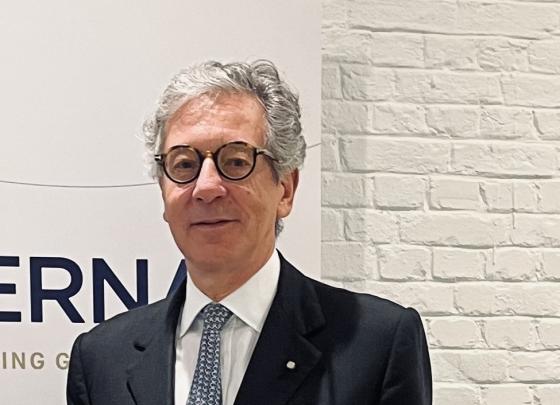
Francesco Vanni d’Archirafi is Chair of Euroclear Holding and Euroclear SA/NV. Before joining Euroclear in 2021, he spent 38 years at Citi, where he served as CEO of Citi Transaction Services, CEO of Citi Holdings and Chair of Citibank Europe. This interview is part of the GUBERNA Governance Talks podcast series.