“It is people who make the difference”: five top directors on the future of governance – 30 years of GUBERNA
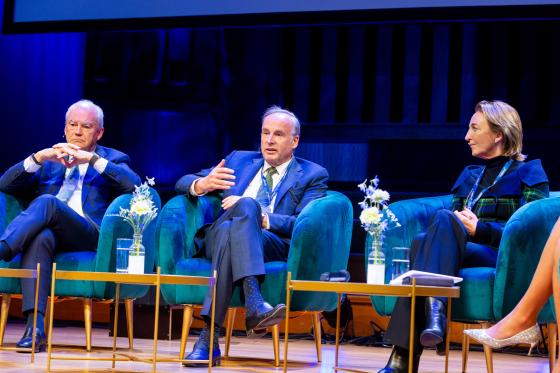
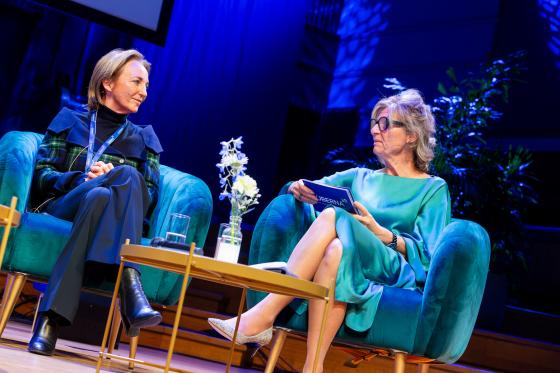
During the evening segment of the Festival of Governance, organized on the occasion of its 30th anniversary, GUBERNA hosted a panel discussion with some of the country’s most experienced board members and executives. Their message was clear: the fundamentals of good governance remain firmly in place, but the way boards operate must undergo profound change.
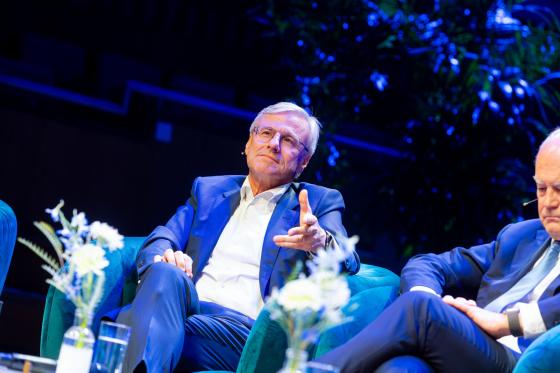
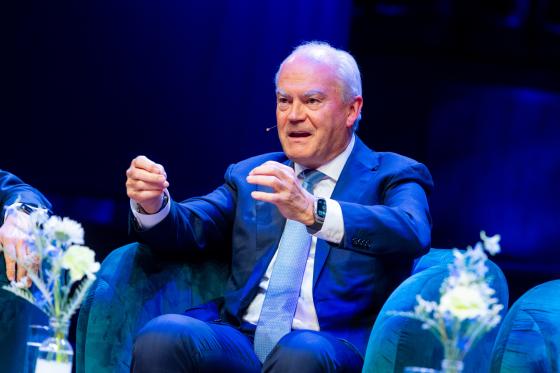
Under the leadership of GUBERNA’s Executive Director Sandra Gobert, Michel Demaré (AstraZeneca), Alain Dehaze (Group Eiffel), Michèle Sioen (Sioen Industries), Thomas Leysen (Mediahuis, Umicore & DSM), and Ann Desender (Barco) shared their insights on the challenges boards face today.
The panel discussion began with the question: should we dare to challenge existing governance practices? The answer was nuanced. The principles largely remain intact, but their implementation requires renewal.
Teams win, not stars
Alain Dehaze opened with a striking sports analogy: “Look at PSG. With Mbappé, Messi… they never won the Champions League. Only when the big stars left did success come.”
From this, Dehaze concluded that team composition is about much more than individual skills. “What you don’t yet see in the annual reports of large companies are the soft skills. Do these people have the ability and the willingness to collaborate? Do they have the time? Because when you hit a crisis, that’s crucial.”
What often causes things to go wrong? Frequently, a dominant chairperson. “In my experience, it often fails when we have an omnipotent president—often an omniparlante. This type of chair doesn’t listen.” Therefore, Dehaze applies a strict personal rule: a chair speaks no more than five to ten percent of the time. The rest is listening and ensuring everyone has a voice.
“Governance is embedded in our culture.”
-Michèle Sioen
Young specialists at the board table
Michel Demaré, Chairman of AstraZeneca and board member at Louis Dreyfus Company among others, shared how boards can take new approaches to grasp complex topics like artificial intelligence. He described a recent board session in Abu Dhabi.
“It’s not the executives giving presentations. It’s the people in the organization who actually work with it. The average age was 32, 33. Specialists in data and systems developing agents.”
For nearly a full day, these young employees demonstrated the AI applications they had developed. “It’s a very modest approach,” admitted Demaré. “Because we may begin to understand agents, but with agentic AI, you need to go a step further.”
The Abu Dhabi session was complemented by external experts, focusing on ethics, governance, and responsibility around AI. “Instead of relying solely on board members’ knowledge, we involve, on the one hand, the young people who work with it, and on the other, external consultants.”
“If the world keeps changing this fast, you need to bring the new generations to the table more quickly.”
Digital natives
Thomas Leysen went a step further. At Mediahuis, he established a “Future Insight Board”: a secondary board with an average age of around forty, but also including people in their twenties and thirties.
“There’s a young influencer, a digital creator, start-up entrepreneurs. Because they live in a completely different world. And for media, disruption will be critical.”
At the same time, Leysen tempered calls for radical overhaul. “The essence of the board’s role doesn’t change: selecting management, ensuring succession, setting the right targets and incentives, approving strategy, and monitoring performance.” What does change are the topics, speed, and complexity.
Leysen also highlighted an often-overlooked aspect: sector knowledge. “If you only have people who bring wisdom and experience but don’t know the sector, debates often remain rather general. You need the right mix.” He also stressed that age diversity receives too little attention. “If the world continues to change this quickly, we need to bring the new generations to the table sooner.”
The executive voice
Ann Desender, CFO of tech company Barco and board member at Fagron, offered the executive management perspective. Her advice: “Don’t overload your board with too many details. Don’t try to act like a geek. Make it understandable.”
Regarding the NIFO principle (Nose In, Fingers Out), Desender was positive: “I think it’s a good principle. You need to find the right balance.” Executives also bear responsibility: be transparent, don’t stage a dog-and-pony show. “Deliver bad news sooner rather than later. Not just with the question of how to solve it, but with a solution in hand.”
She advocated for smaller boards where everyone actively contributes and for continuous self-checks: “Are you relevant and do you stay relevant? This applies not only to the board as a whole but to each member individually.”
Demaré added nuance regarding smaller boards. “It’s easier to manage a board of eight than twelve. But the workload is much heavier than in the past due to geopolitical complications and new technology. If we want committees that work hard and are specialized, we need more people.”
Aligning mixed shareholders
Alain Dehaze offered another perspective based on his experience at Galileo Global Education. “Our shareholding is really a patchwork: management, private equity, the French Sovereign Wealth Fund, a family business. The only thing missing is an activist.”
This diversity brings challenges. “You can agree on ambition and strategy. But then you come to governance mode and the time horizon. A family office thinks very long-term, while private equity has its own rhythm.”
The key? “It’s the people who make a kind of pact together. If you want the diversity of shareholders to create value, you have to achieve it through that path.”
Family governance after being listed
Michèle Sioen, CEO of the eponymous family group, offered a different perspective. Sioen Industries was publicly listed for 25 years but has been entirely family-owned for three years. Yet governance remains stringent.
“That governance is baked into our culture. Board of directors, audit committee, remuneration committee—all the things public companies must do, we continue to do.”
The secret? Clear agreements, a solid family charter, and lots of communication. “As family shareholders, you need to meet three or four times a year to discuss the company. It’s a good way to get everyone aligned.”
On diversity, Michèle Sioen was very clear: “Gender diversity is important, but not enough—you need all profiles.”
Humans and machines
Michel Demaré referenced research comparing medical diagnoses made by doctors, doctors assisted by AI, and pure AI. “The best answers came from pure AI. It was shocking to see.”
Yet he would choose a middle path: the doctor and the AI. “It’s your lived experience that helps you make a decision. We can have all the analyses and data, but there’s also an irrational aspect that needs to be assessed.”
Learning from mistakes
In the closing session, moderator Sandra Gobert asked for personal insights: what lesson would each panelist have liked to learn ten years earlier?
- Thomas Leysen: “Perhaps daring to part ways sooner with board members who are no longer fit for purpose.”
- Michel Demaré: “Trying different ownership structures. A start-up is a very different company.”
- Michèle Sioen: “The mental checklist before attending a board meeting: is there a fit with the company, with its purpose, with its values? And do I really think I can add value?”
- Alain Dehaze: “Do I have the right agenda and the right questions? It’s more important to have the right questions than the right answers.”
- Ann Desender: She likes to arrive half an hour early to chat informally with management. “Because then you sense what’s really going on.” And when reviewing board documents: “What is not in them?”
Want to listen to the panel discussion yourself? Click here for the podcast.