In tempore non suspecto - Principles that withstand storms - 30 Years GUBERNA - Family Business Governance
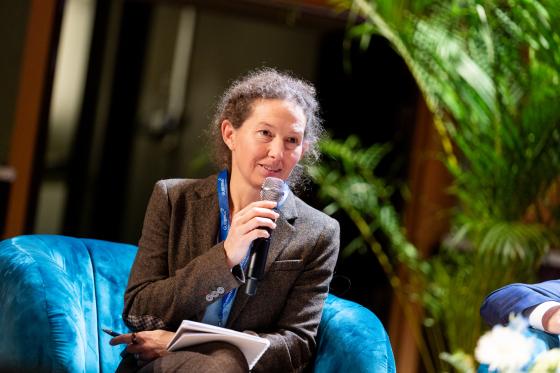
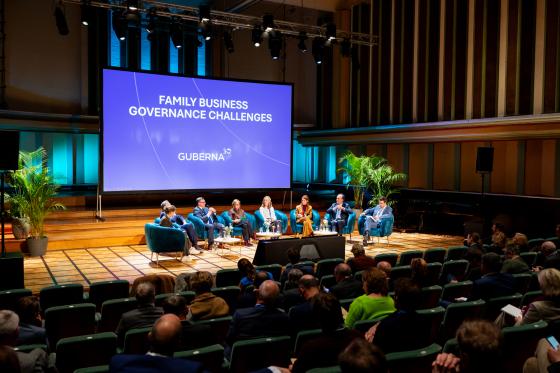
Moderated by Peter De Groote (Editor-in-Chief of De Tijd), this panel discussion addressed concrete challenges within family businesses. Drawing on the panelists’ many miles of experience, it became a well-balanced and engaging conversation about finding the right equilibrium between business and family interests, and about preparing the next generation…
Participants
Sandra Wilikens | Eric Van Hoof | Guido Vanherpe | Paul Depuydt | Caroline De Clerck | Valentine de Pret | Caroline Thijssen
How to Establish the Right Professional Structure
This panel began with the notion that family businesses constantly operate in a tension-filled environment: professionalisation is essential, but how can it be achieved within a structure that also respects the family? The professionalisation of family businesses often raises the question of whether external directors are a necessary component. The panel concluded that external involvement is indeed crucial, albeit to varying degrees. They can help objectify decisions and strengthen governance, particularly in complex situations or during periods of growth.
Another perspective also emerged during the discussion: governance must be bespoke. Sometimes greater external input is required, while in other cases closer family involvement provides calm and stability. For instance, a family chairperson can restore harmony after turbulent periods, while independent directors may continue to serve on the board. It is striking that, at AB InBev, there has been no operational interference from the family since the 1990s, with influence exercised solely through shareholding and a family charter.
While adaptation is crucial, there is another principle that runs somewhat counter to this. Governance indeed evolves with the needs of the business, but what should remain timeless are shared values and clear principles. These must be enshrined in a family charter, where the interests of the business take precedence over individual interests. It is therefore important not to amend governance on an ad hoc basis during difficult times, but to establish principles in tempore non suspecto, in calm periods, so that they can guide successive generations.
External directors play a key role here: they ensure compliance with agreements and bring expertise in strategy and risk management. Cardinal principles create trust as well as the framework in which the CEO can generate value for the business.
A Family in Evolution…
This is, of course, a classic theme: how do you organise succession within family businesses? In all family businesses, the next generation is actively engaged and involved. Yet this usually occurs under clear conditions. In some companies, candidates for senior operational roles must first gain five years’ experience; in others (such as AB InBev), operational involvement is entirely excluded, but new generations can join the board.
Formal guidelines may sometimes appear strict, but clear rules and boundaries primarily bring calm and transparency. Flexibility in assessing the profiles of younger family members is also possible with a qualified majority. Additionally, governance training is offered to prepare future shareholders and directors. This fosters a culture where requirements and education go hand in hand, aiming for responsible ownership and business continuity.
It is also essential to build meaningful connections between younger and older generations. Investment in the next generation cannot occur in silos. An inspiring example is a family that spent a week together at Singularity University in California, with grandparents and grandchildren learning about AI, blockchain, and technological disruption. The young brought fresh ideas, while the elders contributed experience and wisdom. The panel emphasised that this is genuinely necessary. Aligning younger generations, older generations, and the business is an ongoing task and requires deliberate investment.
Shareholders
One of the greatest challenges for family businesses is creating a clear framework within which the board and management can operate. This framework must be set by the shareholders and should cover crucial topics such as debt policy, dividend policy, capital structure, potential inclusion of other families or an IPO, and ethical ambitions. The clearer these agreements are in advance, the more efficiently the board can operate and the less room there is for confusion or conflict.
An example from AB InBev illustrates this perfectly. The family has established a clear hierarchy of priorities: the company comes before the family, and the family comes before the individual. These principles are embedded in a family charter and ensure alignment even in difficult times. During successive crises, COVID, the war in Ukraine, rising raw material prices, and marketing challenges in the US, the family had to make difficult choices. After years of rising dividends, it was decided to suspend dividends entirely for two years. This decision was unpopular, but it was unanimously supported because the framework was clear: the long-term continuity of the business takes precedence over short-term interests.
This example demonstrates the importance of establishing rules and expectations in tempore non suspecto, at moments free from emotional pressure. In this way, a family can not only make difficult decisions but also act united in times of crisis. Governance is not a static document but a strategic instrument that creates calm, trust, and resilience; essential for preparing a business for the next hundred years.