30 Years GUBERNA - Festival of Governance

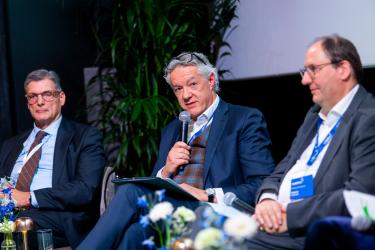
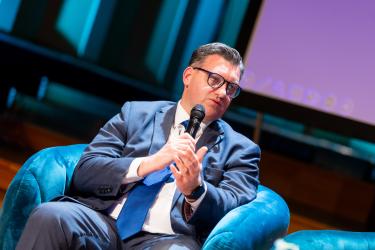
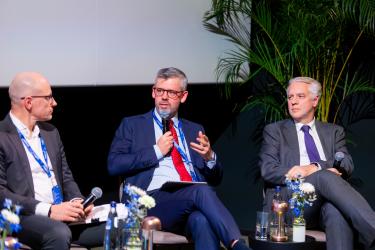
On 27 November, the Flagey building in Ixelles hosted GUBERNA’s Festival of Governance. To mark its 30th anniversary, GUBERNA chose the iconic building as its venue. The programme featured six panel discussions on current governance topics, bringing together forty high-level panellists who shared their knowledge, experience and insights with a large and engaged audience.
You can view the photos from the event, or post a message or photos yourself.
Thirty years of Governance: insights from the past, challenges for tomorrow - From pioneering work to a new generation of directors
30 Years GUBERNA in the press
Our event has also received media coverage. Below is an overview of all articles published so far: keep an eye on this page, as more will be added soon.


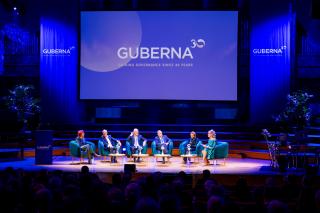

The event consisted of two parts: an afternoon and an evening program. During the afternoon program, you could take part in various interactive sessions in which you actively exchanged knowledge and ideas. In the evening, an inspiring program featuring special speakers was on the agenda.
Below you will find an overview of both parts.

The future of governance and the role of leadership in a rapidly changing world
The keynotes by Herman Baron Daems on fifty years of governance and by Michel Demaré on the future of governance in a time of disruption were very well received.
The evening panel, “Governance and leadership in a rapidly changing world,” moderated by GUBERNA’s Executive Director Sandra Gobert and featuring contributions from Michèle Sioen, Ann Desender, Thomas Leysen, Alain Dehaze, and Michel Demaré, once again provided a strong and substantive conclusion to the day.
Earlier in the evening, GUBERNA Chair Jan Suykens opened the program with a broad reflection on the state of governance today. While his speech addressed a wide range of responsibilities for boards of directors, it also spoke directly to the federal government. Given the presence of the Minister of Justice and the North Sea, Annelies Verlinden, he emphasised the importance of public governance and called for a framework in which the government not only regulates but also enables good governance and consistently applies the same principles within its own institutions.

In the subsequent speech, Minister Verlinden closely aligned herself with the themes raised by Jan Suykens. She reminded us that “good governance is not solely the responsibility of companies or associations. It applies equally to the government. The expectations we place on others must also be met within our own institutions.” With these words, the minister held up a clear mirror to the public sector.
With the Festival, GUBERNA once again confirmed its pioneering role in governance in Belgium. Insights based on academic research and innovative governance solutions help organisations remain resilient in complex times. Our network continues to serve as both a source of inspiration and a driving force in building Better Boards, Better Organisations, a Better World for the next thirty years and beyond.
Catch all the highlights of the event in our aftermovie
Podcasts - An Engaging Afternoon: Six Critical Themes
During six varied panels, attendees had the opportunity to explore different governance themes and hear a range of well-informed insights. Revisit the panel discussions below as podcasts and discover the insights shared during the sessions. A new podcast is published every week. Keep me updated on upcoming podcasts.
-

Outside of the box thinking requires opening up - 30 Years GUBERNA - Future generations shaping the agenda
-

Resilience and innovation begin when everyone joins the dance – 30 Years of GUBERNA - Future of the Workforce
-
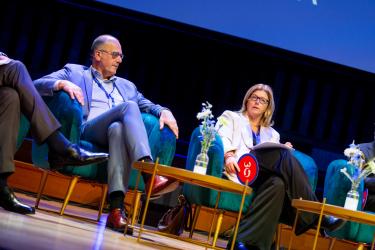
ow Governance Evolves Without Disruption - 30 Years GUBERNA - Innovative Governance
-
-
In tempore non suspecto - Principles that withstand storms - 30 Years GUBERNA - Family Business Governance
-
The governance of state-owned enterprises in Belgium: report of the interactive session at the GUBERNA Festival of Governance


Future generations shaping the agenda
Different generations bring diverse perspectives to the boardroom. This can lead to sharper discussions and more balanced decisions, provided these differences are genuinely addressed. Traditional recommendations on good governance are being questioned: age alone tells us little. It’s about skills, perspectives, and how a board makes space for new voices. Adding a younger member is one thing, but how do you ensure that person truly has an impact?
In this interactive session, we will explore how generations, whether shareholders or not, engage with each other and the influence this has on board dynamics. Relisten as podcast.
- Denis Zenner
- Béatrice de Mahieu
- Hans De Cuyper
- Griet Aerts
- Alain-Laurent Verbeke
- Sophie Stegen
- Louis Jonckheere
In collaboration with Ageas
With the support of Ackermans & van Haaren
Future of the workforce
What do the employees of tomorrow expect from the boards of today? New generations critically examine culture, values, and how organizations handle diversity. This also poses a challenge for boards. Too little diversity can increase groupthink; too much can slow down decision-making. Moreover, simply meeting quotas is no longer enough; the real challenge lies in inclusion. Boards must therefore find the right balance and also determine which dimensions of diversity should be prioritised.
- Emmanuelle Verhagen
- Michel Looyens
- Vicky De Brabander
- Hassan Al Hilou
- Julie Marinower
- Eef Naessens
In collaboration with Hudson
With the support of D'Ieteren
Cybersecurity
Cybersecurity is now at the top of boards’ agendas. It is no longer confined to IT alone, but sits at the heart of strategy, culture, and risk management. In this interactive session, directors and experts will discuss how boards can structurally embed cyber governance—a crucial new role for boards in a high-risk landscape.
- Fabrice Clément
- Vincent Pacheco
- Saskia van Uffelen
- Peter Van Dyck
- Karolien Vanhuffel
- Caroline Thijssen
In collaboration with Delaware – Allen & Overy Shearman
With the support of Diligent
Innovative governance trends
Today, governance is a balancing act between fulfilling core responsibilities on the one hand and driving renewal towards greater agility, openness, and resilience on the other. The world around us is changing at a breakneck pace. Disruption is no longer just a buzzword. Engaging in innovation is a must, but how do we reconcile this with traditional governance models, where the board of directors often acts more as a brake than as a driver?
- Bart de Smet
Elke Van Overwaele
Vanessa Vankerckhoven
Paul Cornet de Ways Ruart
Olivier Hamoir
In collaboration with VBO-FEB
Family business governance challenges
Family businesses form the foundation of our economy. They account for 80% of all Belgian companies. Yet they also face significant challenges: succession across generations, attracting and retaining talent, and financing growth in a capital market experiencing turbulent times. In this workshop, we explore how governance can serve as a lever. Structures such as a family forum, a board of directors, or external management help channel emotions and make strategy more objective.
Sandra Wilikens
Eric Van Hoof
Guido Vanherpe
Caroline De Clerck
Peter De Groote
Paul Depuydt
- Valentine de Pret
In collaboration with EY - BNP Paribas Fortis
Public shareholdership in Belgium
The future of our public enterprises stands or falls with good governance. This raises the question: if the government becomes a less incidental or a more strategic shareholder in the current climate, will existing governance practices in public enterprises endure? In this interactive session, we address three key questions: do shareholders and directors truly understand why they are at the table? Are they sufficiently prepared to carry out their mandate with expertise and courage? And how do they concretely fulfil this role while balancing discretion and accountability?
Jeroen Delvoie
Michaël Vanloubbeeck
Sofie Bracke
Johan Decuyper
Nicolas Daubies
Sandra Gobert
In collaboration with Eubelius
With the support of SFPIM – Fluxys
Discover our speakers and their insights on the themes of the panels.





30 Years of Governance – Articles
These articles, published prior to the panel sessions, provide additional context and background for those who attended.